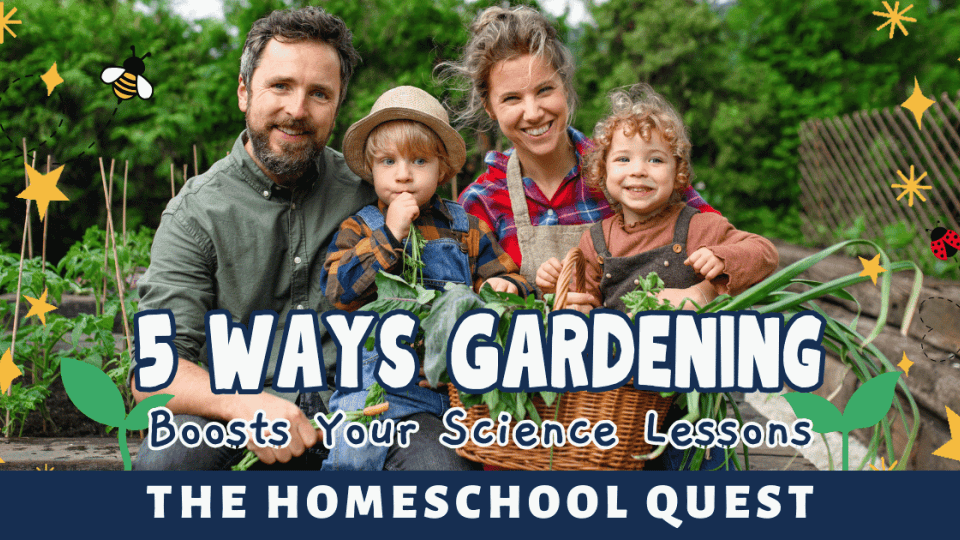
Including 5 easy science boosting tips!
One sunny summer, I decided to shake things up for my five kids by unleashing 1,500 ladybugs in our backyard. The kids were all giggles and excitement, darting after those tiny red helpers and bombarding me with questions about why they munched aphids and how they kept our plants happy. That lively, laugh-filled summer turned our backyard into a science playground and started our love for gardening as a way to learn. As a mom of five homeschool graduates, I created the Gardening Family Funday Adventure Kit and Happy Family Gardening Unit Study Pack to bring that same joy to your family. Here are five reasons gardening makes science a blast, with tips to get your kids excited and learning.
1. Biology Becomes a Backyard Party
Gardening turns dry biology lessons into a hands-on thrill. When kids plant a seed and see it sprout, they’re not just reading about life cycles, they’re watching them unfold! They’ll spot bees buzzing or ladybugs chomping pests, learning how plants and critters work together in ecosystems. It’s science they can dig into, and it lights up their curiosity like nothing else.
Tip: Plant a bean seed in a clear cup with soil to see roots grow. Ask, “What’s new with our plant today?” to spark wonder about growth stages.
2. Hooks Every Kid, No Matter Their Style
Whether your kid loves science or groans at it, gardening has something for them. Little ones can count seeds or sort leaves, making science feel like playtime. Teens get a kick out of big ideas, like how ancient people grew crops to survive, which kept my kids hooked. Gardening invites everyone in, from the dirt-loving toddler to the curious teen, turning learning into a family quest.
Tip: Let each kid pick a garden job they enjoy like planting, watering, or researching a plant’s story. That freedom gets them excited to jump in.
3. Sharpens Their Science Superpowers
Gardening is like a boot camp for noticing the world. Kids can watch a seedling reach for the sun or spot a worm wiggling in the dirt. Writing or sketching what they see makes them feel like backyard scientists, just like my kids did after our ladybug adventure. Asking “Why’s that flower drooping?” helps them think like detectives, connecting clues about nature.
Tip: Start a weekly “garden detective” game where kids note one new thing, a new leaf, a bug, anything. Ask, “What’s different this week?” to hone their focus.
4. Makes Science Feel Real and Useful
Gardening shows kids science isn’t stuck in books, it’s in the food they eat and the air they breathe. They’ll learn why tomatoes love growing near basil or how people grew victory gardens during tough times. My kids lit up when they saw how plants connect to real life, like growing herbs we used in dinner. It’s science that feels practical and downright cool.
Tip: Plant a small herb garden and talk about how plants help each other, like basil shooing pests from tomatoes. It’s an easy way to teach ecosystems while growing snacks!
5. Turns Learning into Family Fun
Homeschooling shines when everyone’s in on the action, and gardening makes that happen. Little kids can explore plants with creative tasks, while teens step up to lead, like planning a garden patch. Our ladybug release is still a family tale we laugh about, and I want you to have those moments too. The Family Funday Guides in the Gardening Family Funday Adventure Kit make it simple: one guide for ages 5-11 with playful activities, another for ages 12+ with leadership challenges, and a Parent’s Guide so you can join the fun without extra planning. It’s a whole day of garden-themed learning that pulls everyone together.
Tip: Try a quick family “bug hunt” in the garden, where everyone looks for insects and talks about what they do. It’s a fun, easy way to learn together.
Ready to Plant Seeds of Learning?
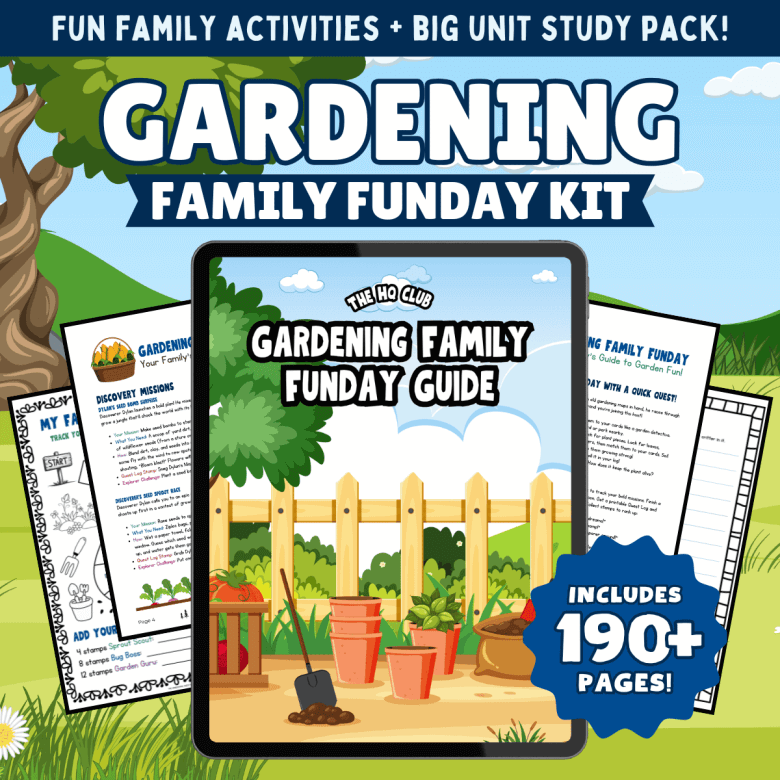
Gardening made science a joyful journey for my five kids, and I packed that magic into the Gardening Family Funday Adventure Kit and Happy Family Gardening Unit Study Pack. With over 190 pages of activities and printables like plant flashcards, history lessons, crafts, recipes, counting games, crosswords, companion planting charts, tracing pages, coloring books, writing prompts, and more. It’s the tool I wished for as a homeschooling mom. The Funday Guides make it easy to create four days of family learning for ages 5 and up. Give gardening a try, and watch your kids blossom with excitement for science! Click here to get the whole kit for just $15.
- Log in to post comments