
Your kitchen table is about to become headquarters. Coded notes will start showing up under bedroom doors, and someone will demand a code name before breakfast.
Every mission in this guide is a spy game first. Kids crack codes, mix secret inks, and dust for fingerprints with the whole family on the case. Under all that cover, they're forming letters and spacing words the entire time. They never need to know that part. It's classified.
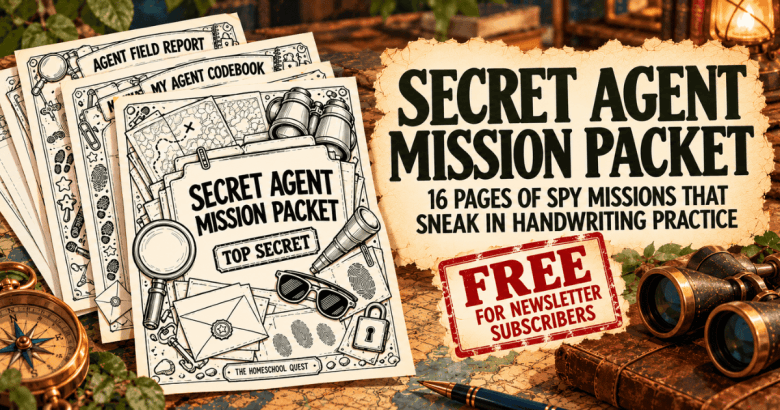
Top secret bonus: newsletter subscribers get a free 16-page Secret Agent Mission Packet with everything needed to run these missions at home. Join the newsletter to get yours.
Assemble Your Spy Kit
Gear: dollar store supplies, flour, clear packing tape, black paper, printer | Agents: under 12
No agent heads into the field empty-handed. The free DIY Kids Spy Kit and Fingerprint Craft from The Crafting Chicks packs a plastic pencil box with dollar store gear like sunglasses, a fake mustache, a magnifying glass, and a tiny notebook, then tops it off with a free printable Top Secret label. Agents can lift real fingerprints by dusting a finger with flour, pressing it onto clear packing tape, and sticking the tape to black paper. That tiny notebook is the secret weapon, because every clue gets written down.
Next, make it official. The free Spy Activities for Kids pack from the National Archives of Australia adds spy name badges, a fingerprint investigation, and a homemade briefcase for classified files. Have each agent print their code name on a badge in their very best letters. A badge nobody can read won't get anyone past the door.
TIP: Keep missions short and spread them across the week. One coded note a day beats one marathon letter that ends in tears.
Crack the Code
Gear: printer, paper or card stock, scissors, paper fastener | Agents: ages 5 to 10
Every spy needs a way to scramble a message. The free Printable Spy Decoder Wheel from Frugal Fun for Boys and Girls turns three paper circles and a paper fastener into a spinning code machine with 27 possible settings. One clever trick sets the code to the first letter of the receiver's name, so every family member gets a personal cipher. Friends in another state can print their own wheels and trade coded letters by mail.
The writing practice hides inside the routine. Agents write the message in regular letters first, then the coded version right underneath. Whoever cracks it writes the decoded message below that. That's one sentence written three times, and every bit of it feels like a game.
How to Decode a Secret Message! (DIY Decoder) | D.I.SPY
Tap Out a Message in Morse Code
Gear: flashlight, paper, pencil, printer (optional) | Agents: all ages
This mission needs zero prep, so it's an easy one to start tonight. Lights off, flashlight on. Cool Secret Codes for Kids from Picklebums includes free worksheets for Morse code, the pigpen cipher, and a blank page for inventing a brand-new family code.
Flash or tap a message across the room, and have your agents write down each letter as they decode it. Dots and dashes alone won't build letter skills, but racing to write out the message will. Every mission ends with the decoded message written in regular letters.
TIP: Short codes work best for kids who reverse letters or form them in odd ways. A five-letter code word written with care does more good than a long message rushed to the finish. Watch your agent write a few letters. If they start at the bottom or build letters in pieces, show the right starting point once, then let the mission roll on.
Write in Invisible Ink
Gear: baking soda, water, grape juice, toothpick or thin paintbrush, paper | Agents: all ages
Invisible ink has a real spy history. Agents on both sides of the American Revolution used it, and British spies marked their letters with an F or an A so the reader knew whether heat or acid would reveal the secret. How to Make Invisible Ink from George Washington's Mount Vernon shows how to mix a baking soda ink that appears like magic when you paint grape juice over it. No heat is needed, so even young agents can run the whole operation.
TIP: Trade the cotton swab for a toothpick or thin paintbrush. Fat swabs make big, blobby letters. A fine tip makes kids slow down and control every stroke, and the big reveal looks even better when every word is easy to read.
McKeyla McAlister's Spy Tips: Secret Messages | Project Mc²
File Your Mission Report
Gear: printer, card stock, pencil | Agents: all ages
Real agents write everything down. The free Top Secret Spy Writing Mission Cards from Inner Child Fun hand kids eight writing assignments, like composing a haiku in invisible ink or writing a classified ad for their private eye services. One card says to type the clues for a scavenger hunt, so have agents write those by hand instead.
TIP: After every mission, ask for a field report on what happened and what the code said. Two or three sentences is plenty for a young agent. Older agents can fill a whole page, especially once their report goes into an official case file. Of course, a report still has to reach headquarters without getting intercepted.
How to Send Notes to Your Neighbor! (DIY Grappling Hook) | D.I.SPY
Learn the Secret Alphabet
Gear: Cursive Spy Academy workbook ($9.99), pencil | Agents: ages 8 to 12
To a kid who can't read cursive yet, it already looks like code. Cursive Spy Academy from Crooked Compass Studio ($9.99) runs with that idea. This paperback workbook for ages 8 to 12 turns every letter of the cursive alphabet into its own spy mission, 26 in all. Recruits decode messages using the letters they've learned so far, write field reports in cursive, and earn an official agent certificate at the end. It's built for beginners, so kids who already write fluent cursive will move past it fast.
Once older siblings learn, let them write their mission notes in cursive so younger agents can't snoop. Few things motivate practice like a secret language the little ones can't crack yet.
Hide a Message in Plain Sight
Gear: paper, lined paper, scissors, pencil | Agents: 12 and up
Older agents are ready for a trick real generals used. In 1777, British General Henry Clinton sent a letter that looked perfectly ordinary. Laying a cutout mask over the page revealed a different message hidden inside. The original letter and its mask are online at the University of Michigan's Clements Library, and kids can compare how the letter reads with and without the mask.
To make one, cut a shape from the middle of a sheet of paper and lay it over lined paper. Write the secret message inside the opening, lift the mask, and fill in an innocent letter around it so the whole page makes sense. Every word has to fit exactly where it belongs, which makes this sneaky spacing and sizing practice. Crowded, uneven writing gives the secret away, so agents learn to write neatly on purpose.

Make it even easier. The Secret Agent Mission Packet includes top secret letter paper and a matching secret grille with step-by-step directions, so your agents can start right away. Join the newsletter to grab it.
Your Next Mission: Writing Prompts
For agents under 12: Headquarters has a case for you. Someone in your house hid a favorite snack and left behind one clue. Write a short mission report that tells where you searched, what clue you found, and who you think did it. Then pick one word from your report and write it in a secret code for someone at home to crack.
For agents 12 and up: You're a spy, and your next letter home will be read by an enemy censor before it reaches headquarters. Write an ordinary-looking letter of 5 to 8 sentences about your week. Hide a three-word secret message inside it by using a mask like General Clinton's. Write the final copy in your neatest cursive, since a messy letter draws attention. Then hand it to someone at home and see if they find the hidden message.
Bonus Missions for Code-Crazy Agents
For agents who can't get enough codes, these will keep the missions coming.
- 5 Secret Codes to Write a Coded Letter from Kids Activities Blog
- Secret Codes for Kids from Rediscovered Families
- Top Secret Watercolor Messages from Mabey She Made It
- DIY Secret Message Decoders from Pink Stripey Socks
- Youth Activities from the International Spy Museum
Every agent needs a mission packet. Newsletter subscribers get the Secret Agent Mission Packet: agent ID badges, a code maker slider, an Agent Codebook with Morse code and pigpen, two coded spy postcards, top secret letter paper with a secret grille, mission cards, a field report, and a sheet of spy stickers. Sign up here and your agents' next assignment will be waiting.

The resources and ads below are from our advertising partners.
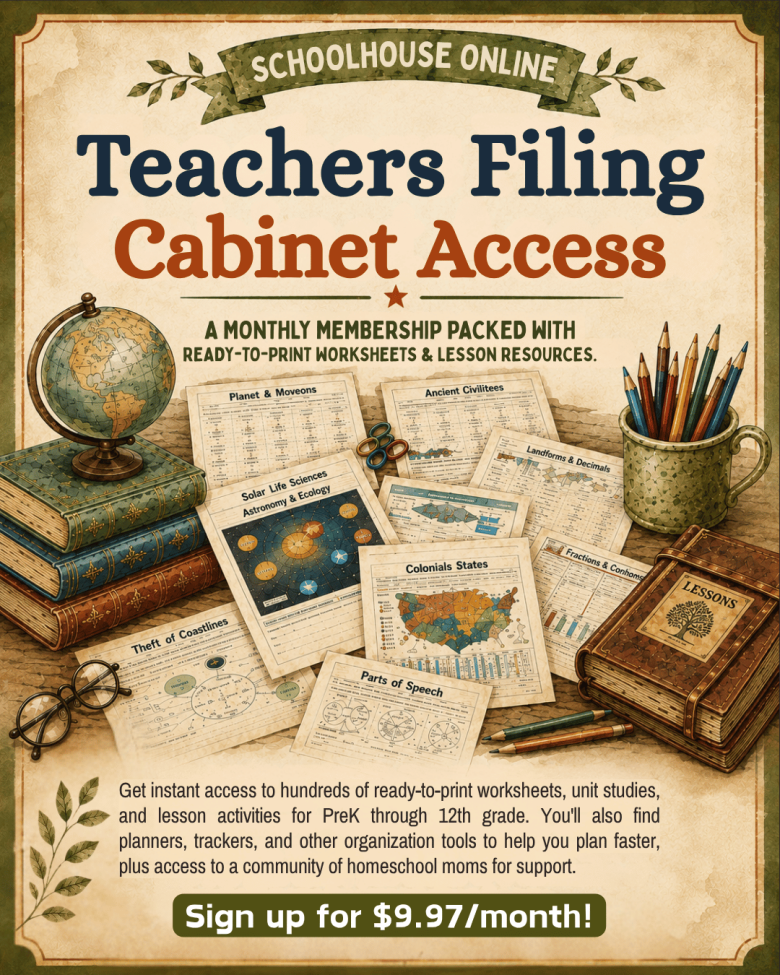 | A monthly membership packed with ready-to-print worksheets and lesson resources. Get instant access to hundreds of ready-to-print worksheets, unit studies, and lesson activities for PreK through 12th grade. You'll also find planners, trackers, and other organization tools to help you plan faster, plus access to a community of homeschool moms for support. Sign up for $9.97/month! |
 | An interactive, web-based history study focused on the people who shaped World War 2. This unit study puts the people of World War 2 at the center of the lesson. Delivered through an interactive, web-based format, it walks students through the key figures who shaped the war, helping them understand history through real stories, not just dates and battles. Buy now for $20! |
 | 20-page shark workbook covering anatomy, habitat, and behavior in one fun unit. This 20-page digital workbook covers shark anatomy, habitat, and behavior through colorful illustrations, fill-in pages, crosswords, and diagrams. Kids complete fun activities like labeling charts and writing short opinions about what they learn, making it an easy addition to any science routine, especially during Shark Week. Buy now for $11.99! |
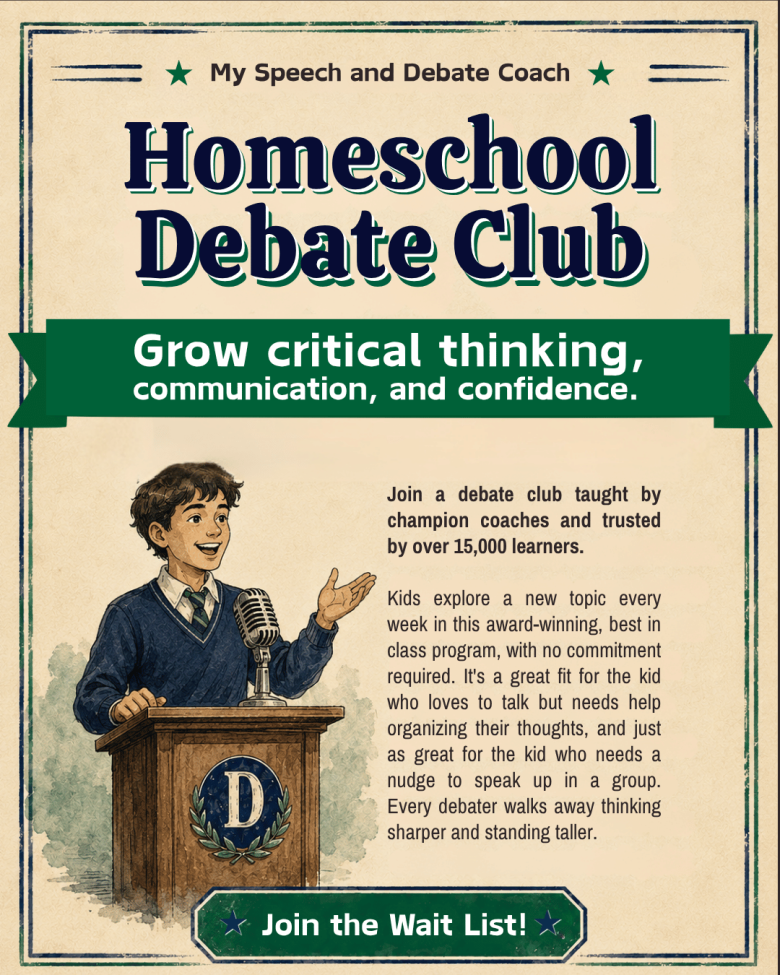 | Grow critical thinking, communication, and confidence. Join a debate club taught by champion coaches and trusted by over 15,000 learners. Kids explore a new topic every week in this award-winning, best in class program, with no commitment required. It's a great fit for the kid who loves to talk but needs help organizing their thoughts, and just as great for the kid who needs a nudge to speak up in a group. Every debater walks away thinking sharper and standing taller. Join the Waitlist! |
 | Three reading-based resources exploring forensic science, cybercrime, and cold case breakthroughs. This bundle includes three reading passages covering the history of forensic science, modern cybercrime, and cold cases solved through DNA and digital forensics. Each resource comes with 20 analytical questions, an answer key, and note-taking sheets. Built for high school and college-level criminal justice, forensic science, or social studies courses. Buy now for $10! |
Check out these amazing homeschool resources!
VillageGather helps families find like-minded connections, local plans, and school-friendly community options nearby. Try the free tier to explore limited features, or upgrade to full access for $6 a month. Create a profile and start finding families near you today. Sign up for $6/month!
Roar into learning with the Dinosaurs Family Unit Study! Over 100 fun worksheets for homeschoolers. Explore prehistoric giants through engaging activities. Perfect for curious kids! Buy it now for $5
Want to reach 300,000+ homeschool families?
Explore our affordable advertising plans.
- Log in to post comments